'The BJP must realise that a resurgent Rahul Gandhi will take the battle straight into its camp.' 'He is not going to be held back by the misdeeds of UPA 1 and 2, so there is no point harping on them,' says Sanjeev Nayyar.

It was truly heartening to see how the Sikh community had risen to the occasion during the Black Lives Matter peaceful protests and the coronavirus pandemic and selflessly served those looking for nourishment.

Six intrepid mobike riders undertake a journey from Kashmir to Kanyakumari in support of the armed forces.
Rediff readers tell us what they did with their first salaries.

The new chief minister will be one of the most closely watched politicians in the country in these media-driven times.

It is mischievous to imply that the proposed bill to grant citizenship to persecuted Hindus, Sikhs, Jains and Buddhists from other nations implies that Muslims and Christians are not Indians, says Sanjeev Nayyar.

The privately-owned Hangzhou-based group, which has been in news for its impending IPO, is already sourcing human hair from the southern regions of India and has identified this category as a 'big opportunity', along with others like machinery, agro products, apparel and spices.

More than 3,000 squads under health and local self-government departments have started the process of cleaning houses and public places, official sources said.

Sheela Bhatt visits a large urban basti a mere 20-minute drive from the prime minister's home to discover a story of grim struggle in the time of lockdown.

A nation that aspires to be a superpower and wants to join the ranks of global leaders in knowledge, science and technology should declare an all out war on ills like superstition and black magic at all levels, says Dinesh C Sharma.

Though the worker strike at the Gorakhpur-based publisher of Hindu religious texts has been called off, it hints at an underlying financial crisis, says Manavi Kapur
'The film industry will remain soft targets and continue to be picked upon with no respite, with no choice but to give in due to personal safety and financial compulsions,' says director Suparn Verma.

A look at few gurus who have attracted controversy in recent times.

'It is vital that objects such as the Harihara -- and collections from South Asia generally -- remain here,' the British Museum tells Vaihayasi Pande Daniel.

'Imagine how secure are our seaports and airports that 10,000 objects can leave every decade and our custodians are not even aware?' 'This kind of targeted looting when thieves pick and choose the best of Indian art and steal on an industrial basis will eventually impoverish our great land.'

Cash-and-carry stores try tricks, from playing Bollywood music to customising orders, to retain customers.

'It was only relatively recently that Subhash Kapoor was able to secure the sources in India, Afghanistan and Cambodia, that allowed him to get the really highest level objects, and that helped propel him in recent years up the ranks.'

A look at few gurus who have attracted controversy in recent times.

The positivity over Narendra Modi's election speech in Jammu is unanimous, but it comes with guarded optimism as many would like to wait and watch to see how the new government actually manages the 25-year-old issue, says Upasna Pandey

The controversy over Sant Rampal and his army of followers taking the law into their hands has once again thrown the spotlight on the clout that India's godmen possess.

Vat Vrikshya -- banyan tree in Sanskrit -- helps tribal women, with absolutely zero formal education, set up businesses.

They live on the road under a temporary, plastic roof. But, for 11 days, Lord Ganesha finds a home in their abode.
Deras like Sacha Sauda made the poor feel secure, cared for, loved, provided a support system and gave them dignity, says Sanjeev Nayyar.
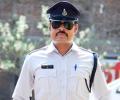
Indore's Ranjeet Singh moonwalks to control the traffic with his iron will and dance moves!
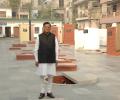
'I had been to a village in Haryana. One woman who had four daughters-in-law and three daughters, told me that she had to be awake the whole night to take each of them, one by one to the fields.' 'I am not saying all rapes are because of lack of toilets. 20 to 30 percent of rape cases happen because of the lack of toilets.' Dr Bindeshwar Pathak, founder, Sulabh International, on how India should go about building toilets for all its people in this exclusive interview with Shobha Warrier/Rediff.com

Mumbai claims to have a large number of developed public and private medical facilities. It attracts patients from all over, including abroad, for specialist care. Hoardings proclaiming all sorts of 'state-of-the-art' medical facilities dot its skylines. The lack of a developed emergency medical response system is completely incongruous with all this, says Dr Sanjay Nagral.
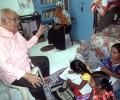
'I've seen the craze for English education even among the poorest. But that is only for their sons. Parents feel thrilled when they see their sons going to school wearing a tie. They don't mind paying for their sons' private tuitions too.' 'But daughters are sent to municipal schools, madarsas, small schools where teachers with no teaching skills are paid Rs 2,000 or Rs 4,000. That's why more girls come to my class.' Syed Feroze Ashraf, who has sent 500-odd girls (and a few boys) -- all first generation learners, children of grave-diggers, hawkers, rickshaw-drivers, tailors and watchmen -- to college, speaks to Jyoti Punwani. A Rediff.com Special.
